

Constant testing of your live environment is important, but launching a defective voice experience risks losing market share. In fact, recent research shows that 40% of US customers will stop doing business with a company after a bad phone experience.
Luckily, many issues can be identified and understood before they reach your live, production environment. It’s a core pillar of building and updating a reliable IVR, but opportunities for scale, efficiency, and global coverage shouldn't be overlooked. Today, we’ll be looking at five ways to make preproduction testing work even harder for you.
But first, if you aren’t yet familiar…
What is Preproduction Testing?
Preproduction is Klearcom’s suite to automate testing of your IVR and AI voice agents before they go live. Build a test model of your IVR (or import one from another platform), then run it as often as you need until every journey works the way your customers expect.
As well as saving you time on troubleshooting your live IVR, the flexibility benefits are huge. Because issues are found and fixed before launch, you can roll out updates to your voice channels with confidence, protecting revenue and reputation with every release.
Download our Preproduction one-pager here.
Many people are already using such testing, but here are some additional things you can do that you may not be aware of:
1. Test all your IVR options, every time, before they go live
Press 1 for the basics, press 2 for something a bit more advanced.
Preproduction has 9 different node types, mirroring the range of engagements you might have in the real world, such as:
- Menus and Prompts, the building blocks of caller navigation and guidance
- Data Lookups, checking if the caller is already known to your system so they can be routed to an agent right away
- Data Captures, collecting details such as the name, account number, and more
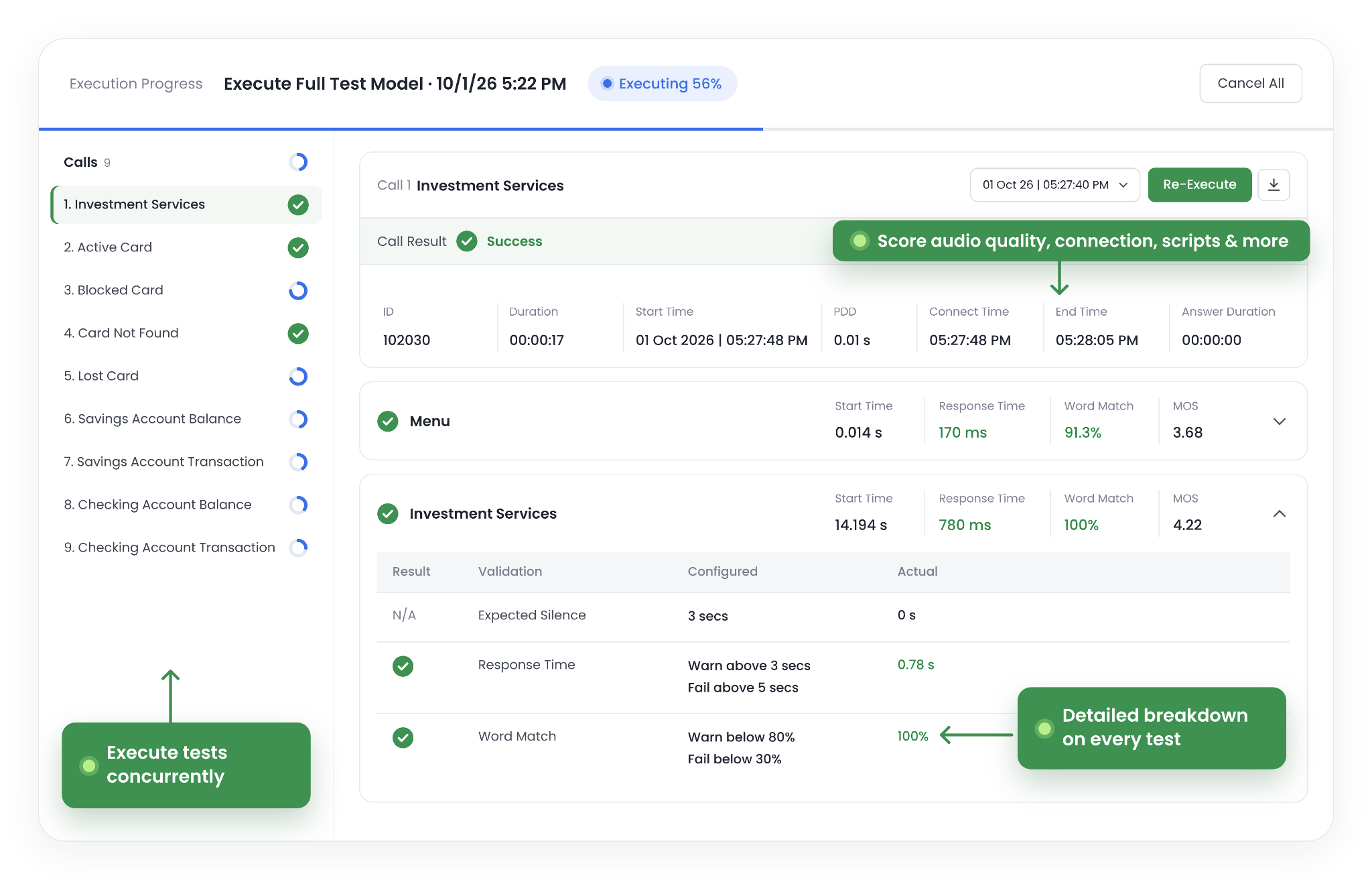
2. Run multiple tests concurrently
A full IVR testing process can take hours if you test one call at a time.
Running several tests at once means you can complete testing much faster, minimizing the time between test and launch.
3. Test 50+ languages in 100+ countries
International brands need to ensure a consistent, reliable experience in every market they operate in. The risks that a poor-quality, disconnected IVR presents from a reputation, revenue, and compliance perspective are still present.
Not only is it important to test in the local language, but also using a local carrier to mimic the experience of a customer in that market. Faster cycles also mean you can test after every change, rather than saving it all for the end of a release.
4. Focus on testing one specific area of your IVR
If you are only focusing on improving one area of your IVR, you may not need to test every segment every time while you refine it. An efficient approach is to isolate the core areas and run tests there.
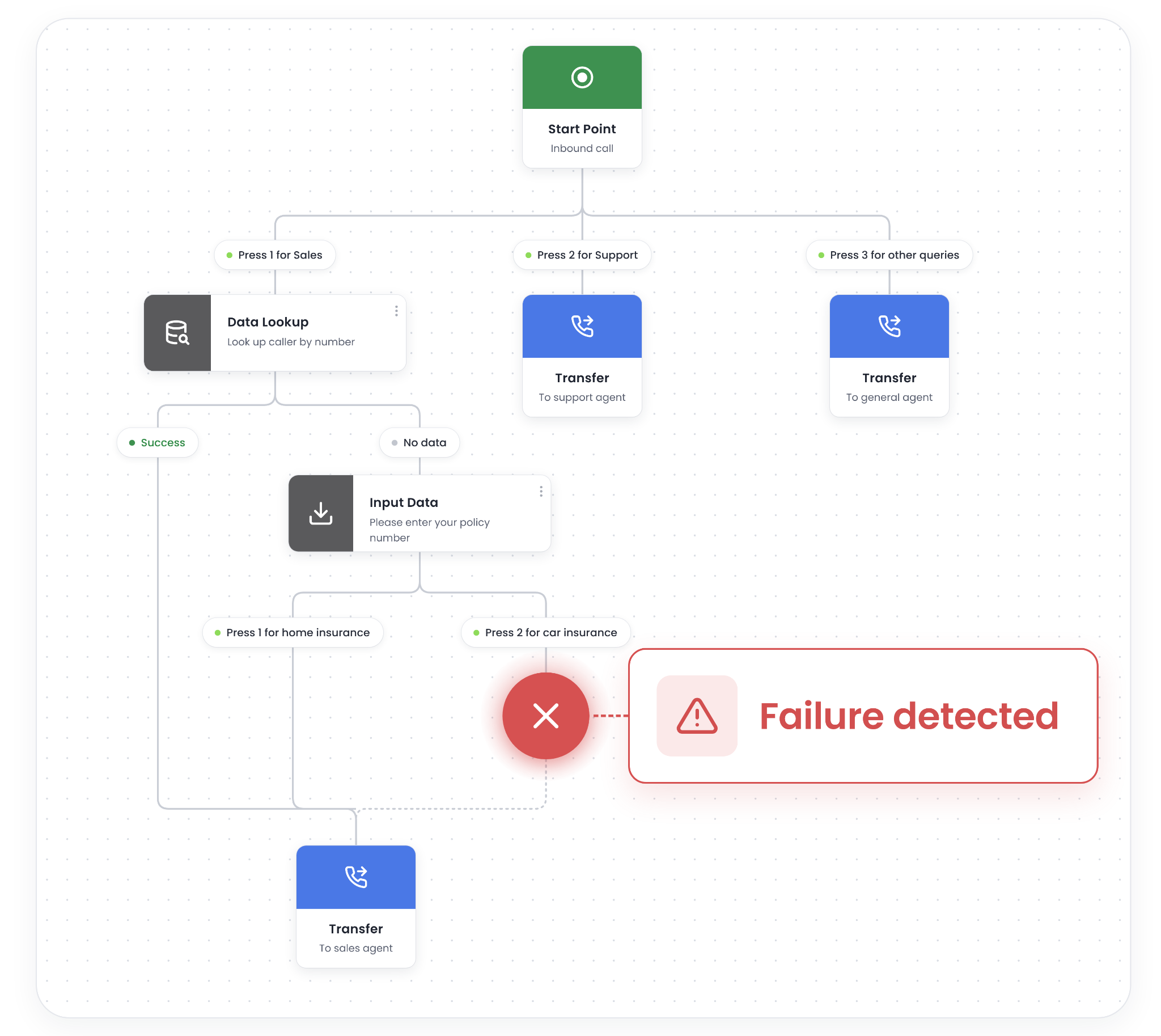
Preproduction’s Test Model Studio lets you visually locate at-risk areas of your IVR and do 1-click testing of a specific caller journey, or a collection of related similar journeys, that may be impacted by recent changes. You get rapid feedback as you iterate, then run the full suite once the work is done.
5. Save hours by switching your testing to the live environment
You’ve worked hard to perfect your preproduction testing; you don’t want to have to rebuild it all again when it goes live.
Good news, you don’t have to.
A single click is all it takes to transfer your preproduction testing into live production monitoring. Your coverage stays continuous, all within the Klearcom platform.
Are you testing your IVR before you go live?
Letting failures slip into your customer-facing live environment is an avoidable situation with potentially severe consequences. Quickly testing and fixing issues in preproduction is a comparatively cheap insurance policy.
If you’d like to get Preproduction testing added to your Klearcom account, please speak to your account executive today. Not a Klearcom client? Get in touch!